Scaling a clothing brand from 5 to 40 employees
The situation
Pleated Up is a clothing brand that was scaling fast, growing from 5 employees to 40. The informal systems that worked at small scale were breaking apart.
They sell both readymade and made-to-order garments. Orders come through their Shopify store and through chat conversations. Each order can have multiple items with different customizations, and those items need to be routed correctly: some to inventory, some to cutting and stitching.
At 5 people, you can keep this in your head. At 40, you can't. And the problems weren't just on the workshop floor. Invoices were processed manually, leave was tracked in notebooks, sales data lived in Shopify with no easy way to analyze it, and there was no single place for design assets.
Fixing the workshop floor
The most urgent problem was orders. The error rate was 5%, and it was getting worse as the team grew. This wasn't a UI design project. There was no Figma file. I designed and built a system made of connected tools and custom scripts.
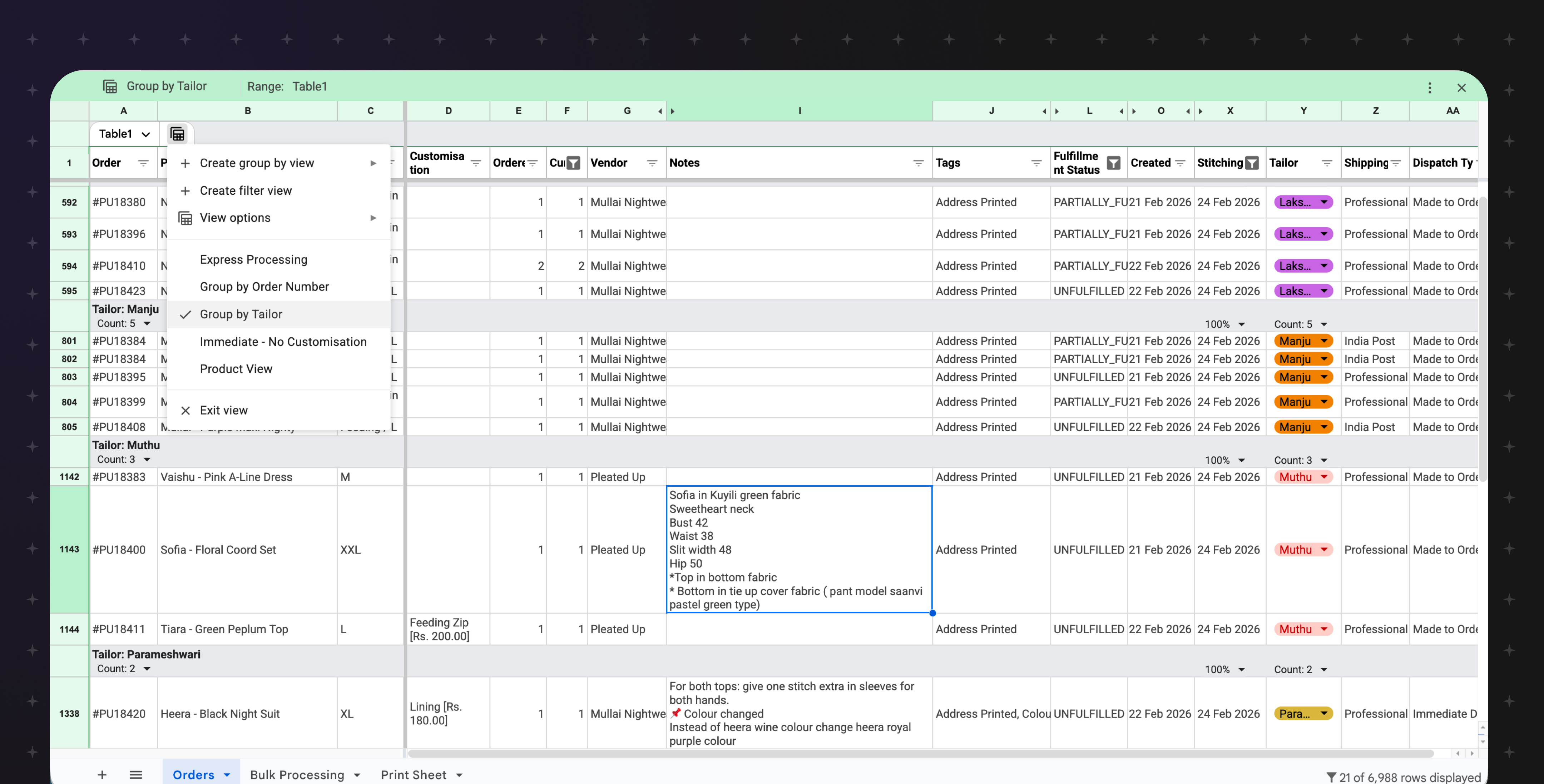
Order sync. A custom script pulls every line item from Shopify into a Google Sheet with all order details, customization specs, and product information. Each row is one garment, not one order, because that's how the workshop floor thinks.
Workshop tracking. Additional columns track cutting date, stitching date, tailor assignment, and shipping provider. Saved filter views mean each team sees exactly their queue.
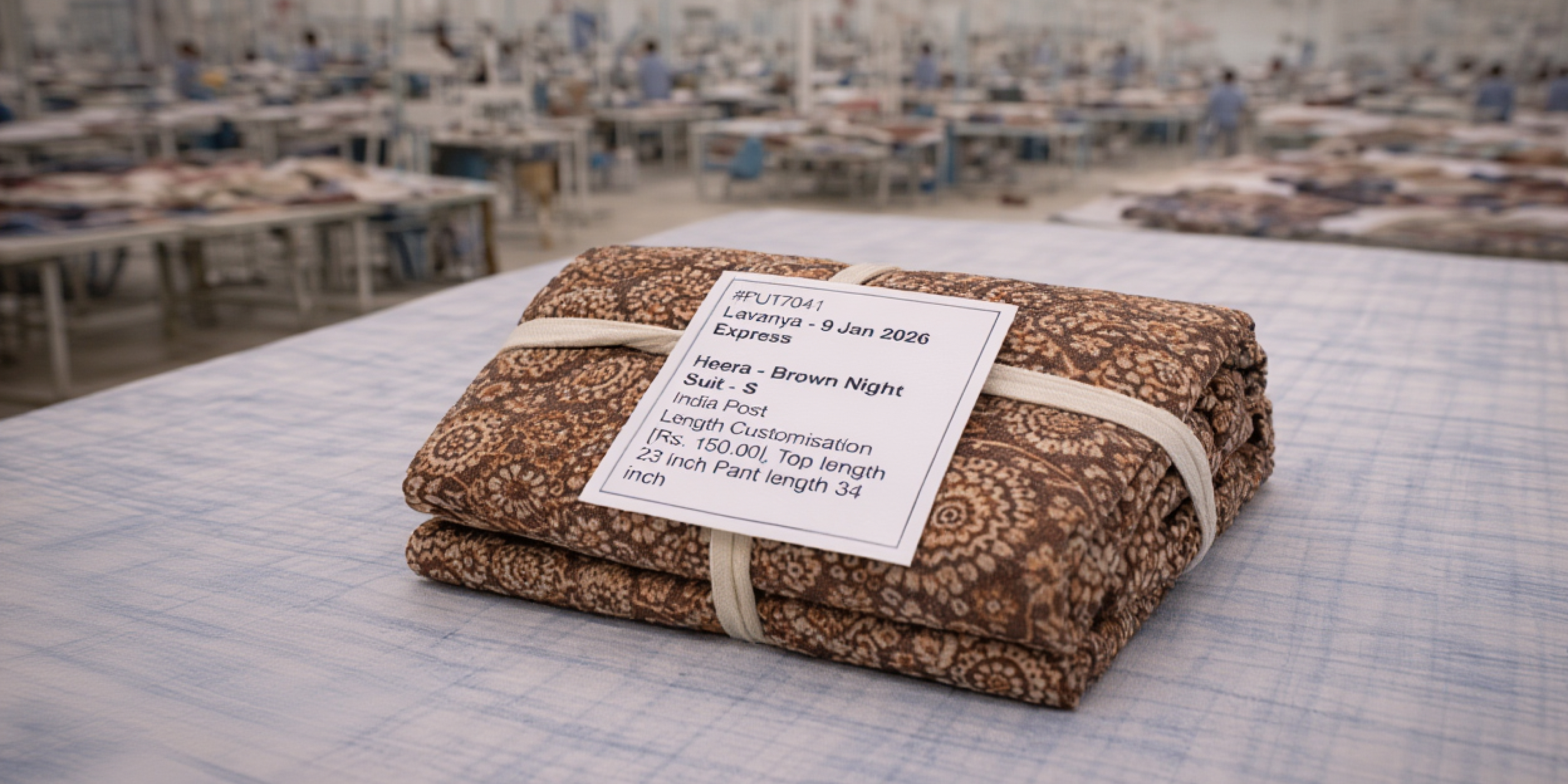
Garment detail cards. Another script generates a PDF with a small printed card for each garment. That card gets printed, attached to the fabric, and stays with the piece through cutting, stitching, quality check, and packing. It's the physical thread that keeps everything traceable.

The new system works because every garment has its own identity from the moment the order comes in. The information follows the garment physically (via the printed card) and digitally (via the sheet). Nobody has to remember anything. They just read the card. Error rates dropped from 5% to 0.5%, order processing became 3x faster, and the team saved 30 man hours a day.
Building the rest of the business tools
With the workshop floor running smoothly, the next bottleneck was everything around it. The business was still paying for expensive software that did too much, or relying on spreadsheets that did too little. Using Claude Code, I built a custom suite of tools, each one solving a specific problem the team actually had.
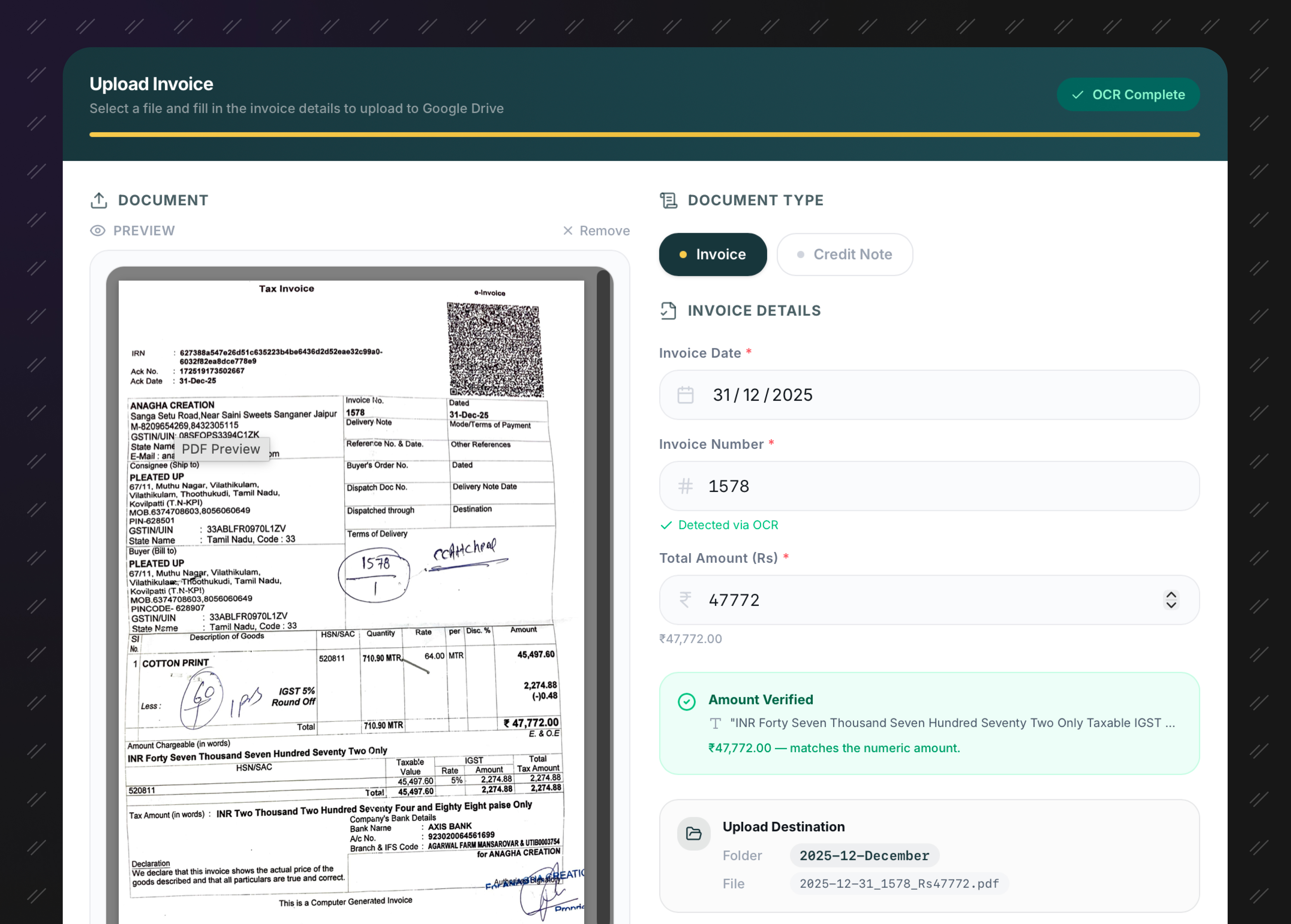
Smart invoice processing. Photograph a vendor invoice, and AI plus OCR extracts the details automatically. Data gets stored in Google Sheets, files organized in Google Drive. What used to take 15 minutes per invoice now takes 30 seconds.
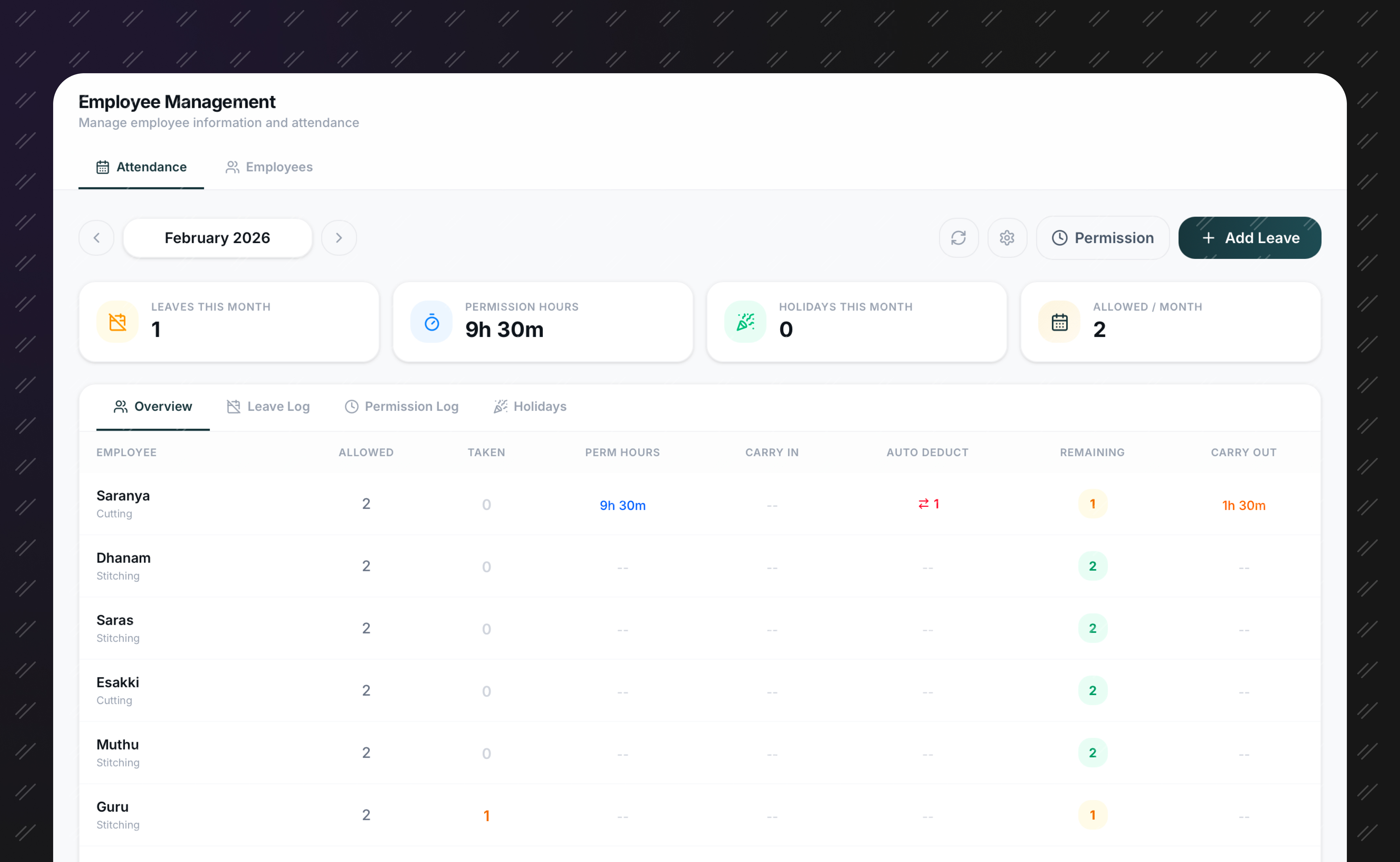
Employee and leave management. Tracks attendance, permissions, and leave balances. Computes salaries based on actual days worked.
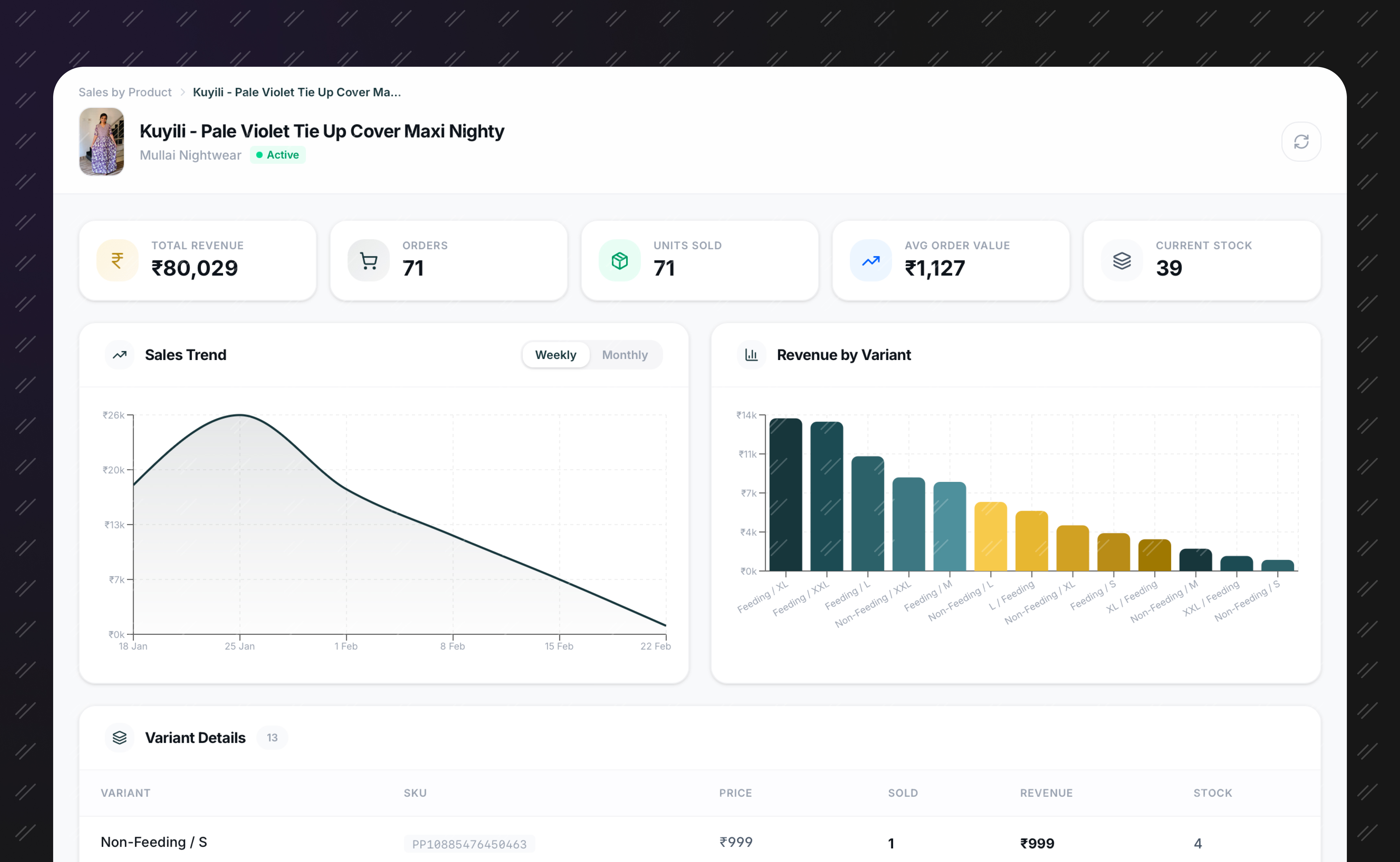
Shopify analytics. Sales metrics, variant breakdowns, and monthly trends pulled directly from Shopify into a custom dashboard.
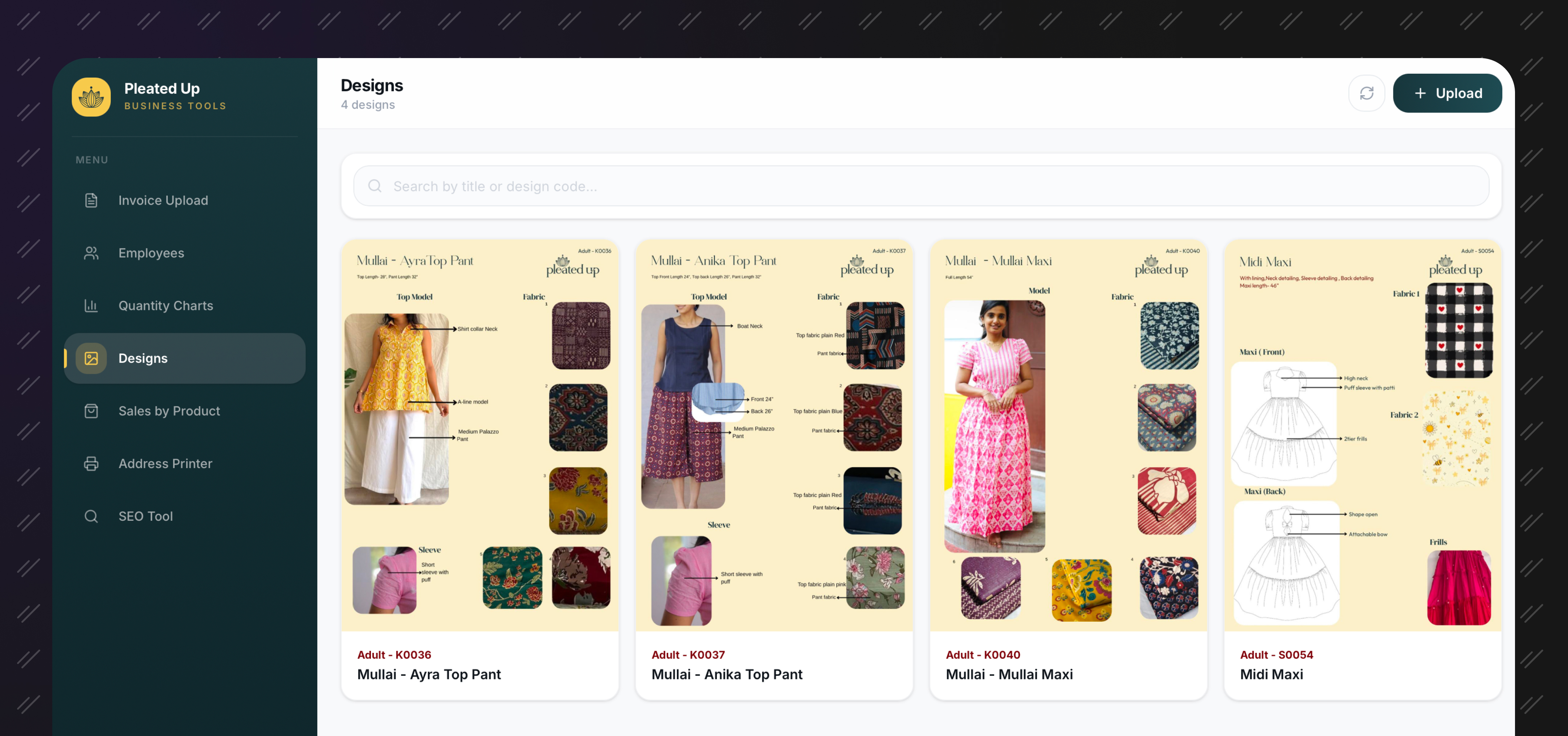
Design asset library. A searchable repository connected to Google Drive for all textile design files.
Role-based access. Different team members see only what's relevant to their work.
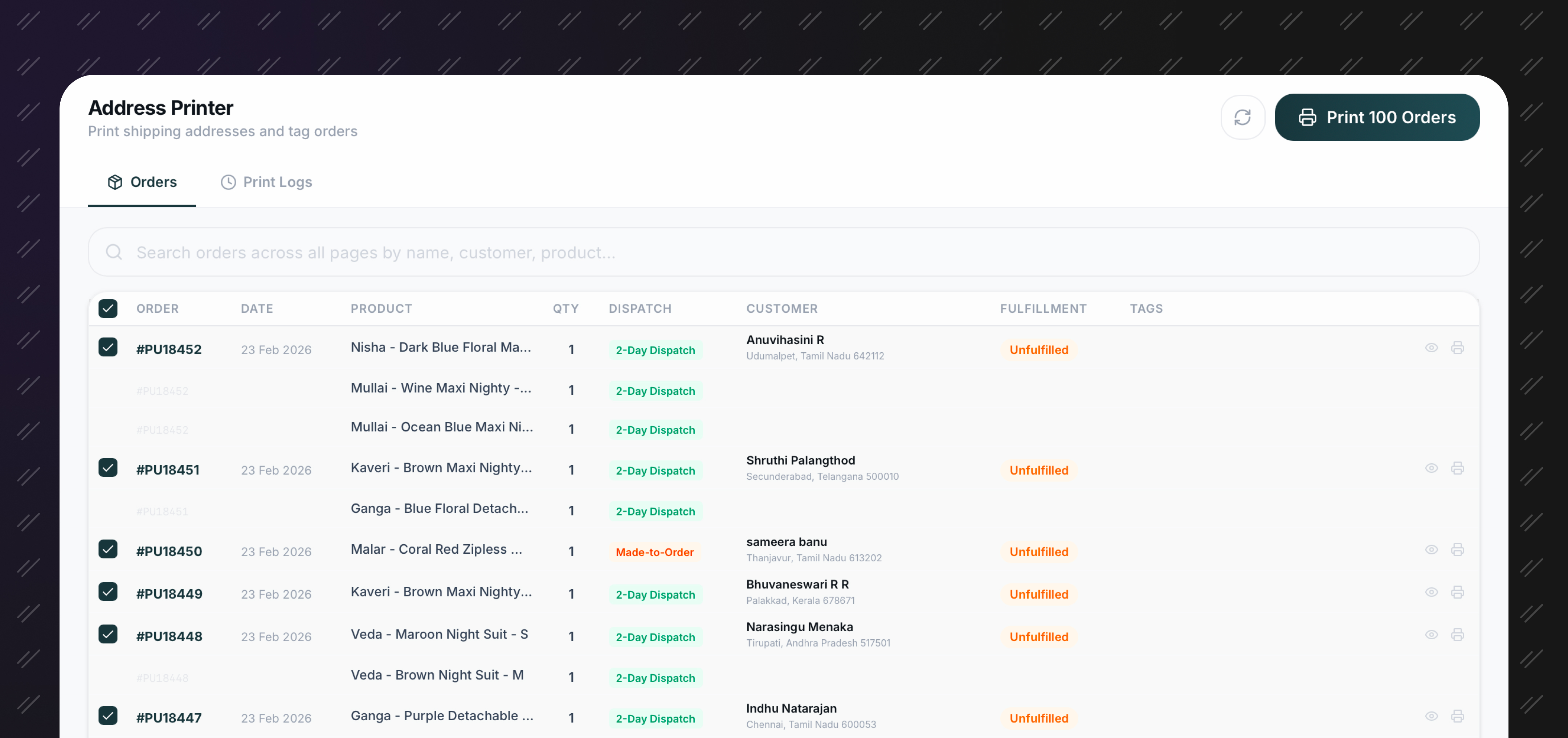
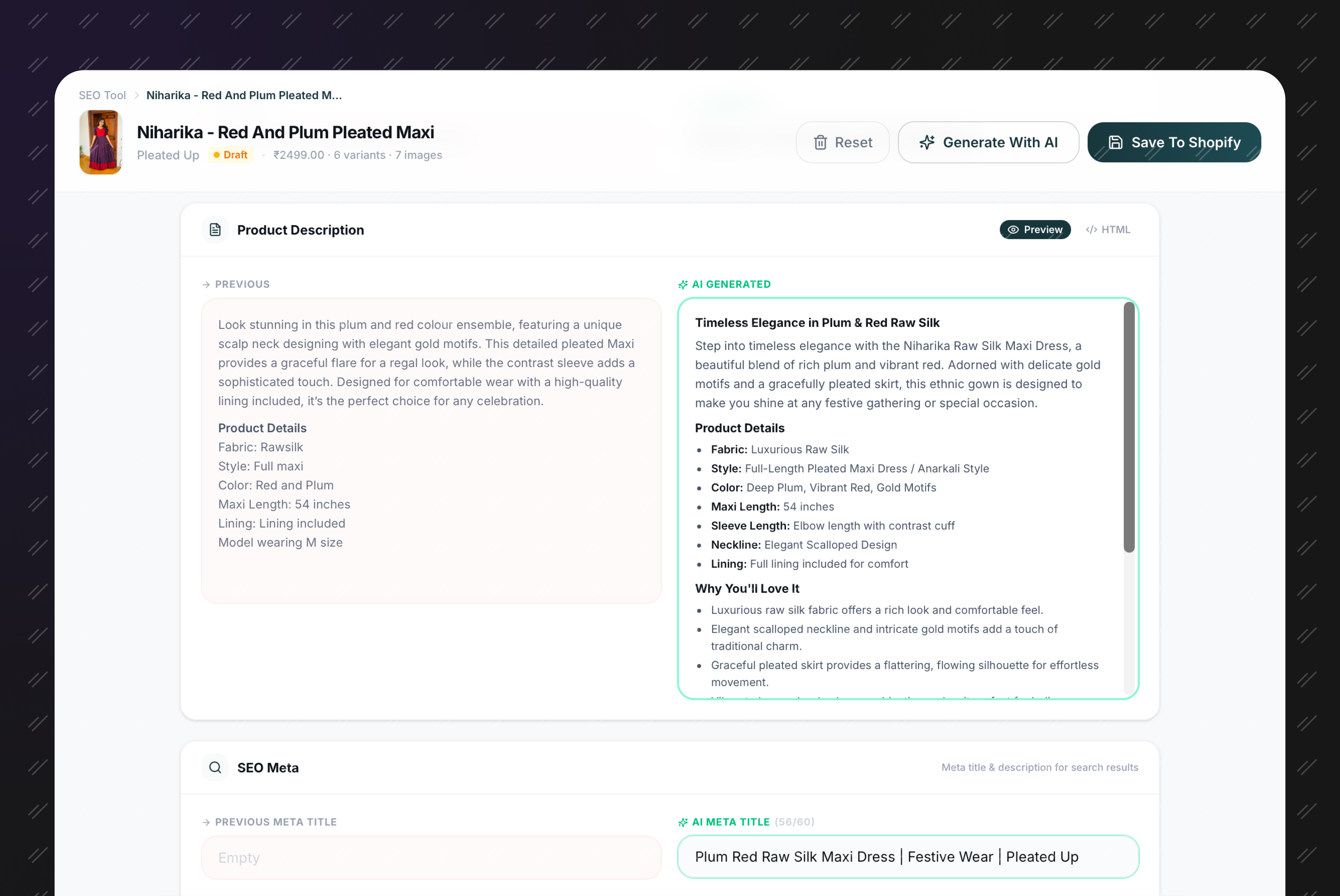
The entire suite replaced $400/month in off-the-shelf software and fits the business better than any of those tools ever did.
Design beyond the screen
I could have approached this as a UI project and built an app. But the team is in a tier-4 city. They're comfortable with Shopify and Google Sheets. The workshop floor needs printed paper, not another screen.
The right solution was the one that fit how people already work: custom scripts, well-structured spreadsheets, and purpose-built tools using Claude Code. From the order sync that fixed the workshop floor to the business suite that replaced expensive SaaS, every piece was designed for the way this team actually operates.
- Error rates dropped from 5% to 0.5%
- Order processing became 3x faster
- Reduced 30 man hours a day
- Replaced $400/month in off-the-shelf software