The problem
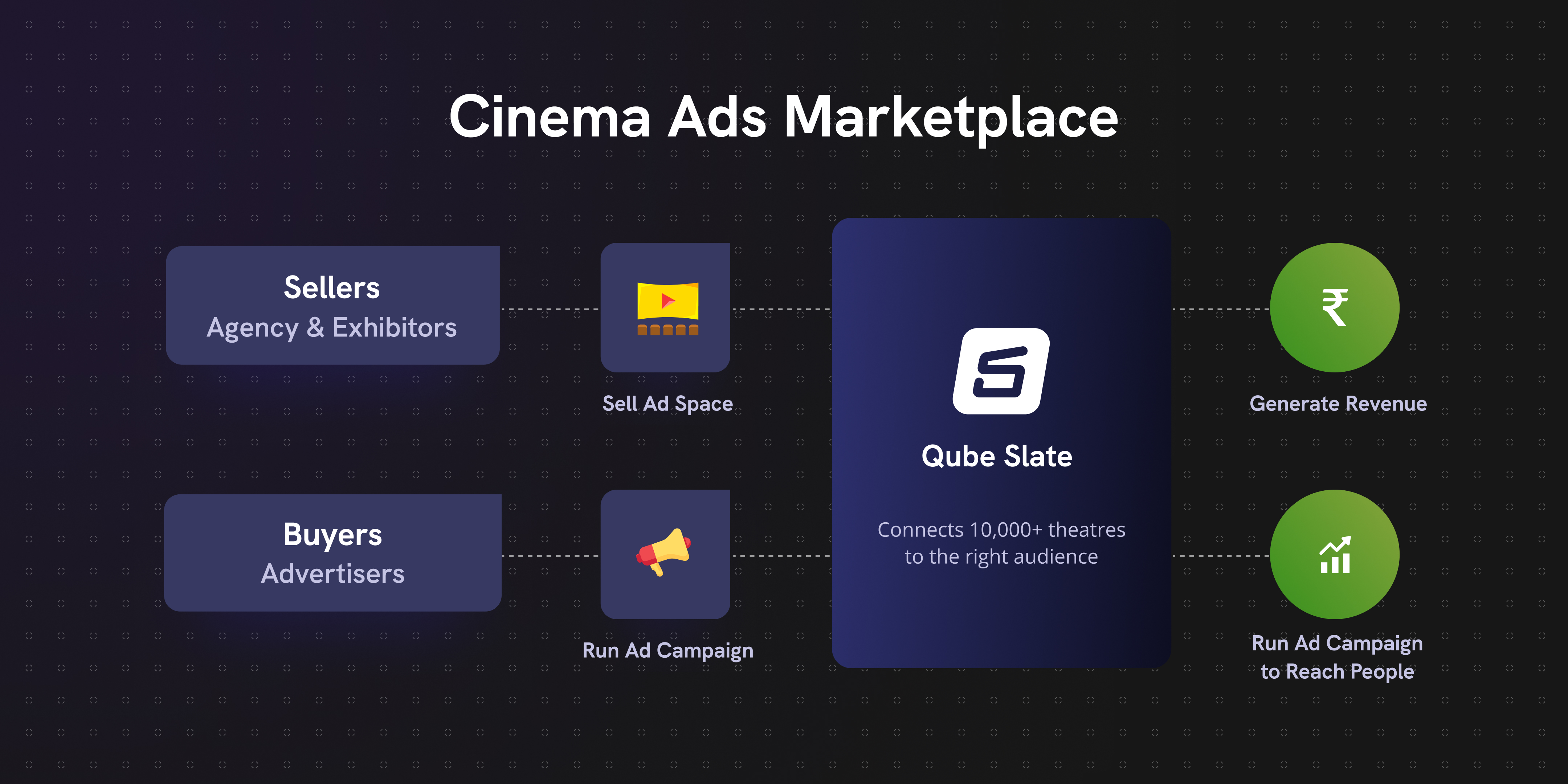
Qube is one of the two major players in Indian cinema advertising, and it accounts for 40% of revenue. But the operations behind it were held together with manual processes: a disconnected ERP workflow for scheduling, fragmented data, no unified platform.
I set out to change that. The long-term vision was a marketplace where theatres, media agencies, and advertisers all operate. The immediate need: a platform to replace the manual chaos.
How I worked
This project blurred every line between design and product management, and that was a feature, not a bug.
I worked so closely with the PM that our roles overlapped constantly. Together, I built user personas, ran market and competitor analysis, and conducted interviews with Qube Cinema Network. I wrote user stories alongside the product team, which gave me a deep understanding of every scenario and edge case.
I also worked tightly with engineering throughout, not just at handoff, but during concept development. Understanding technical possibilities and constraints shaped my design decisions from the start.
The design challenge
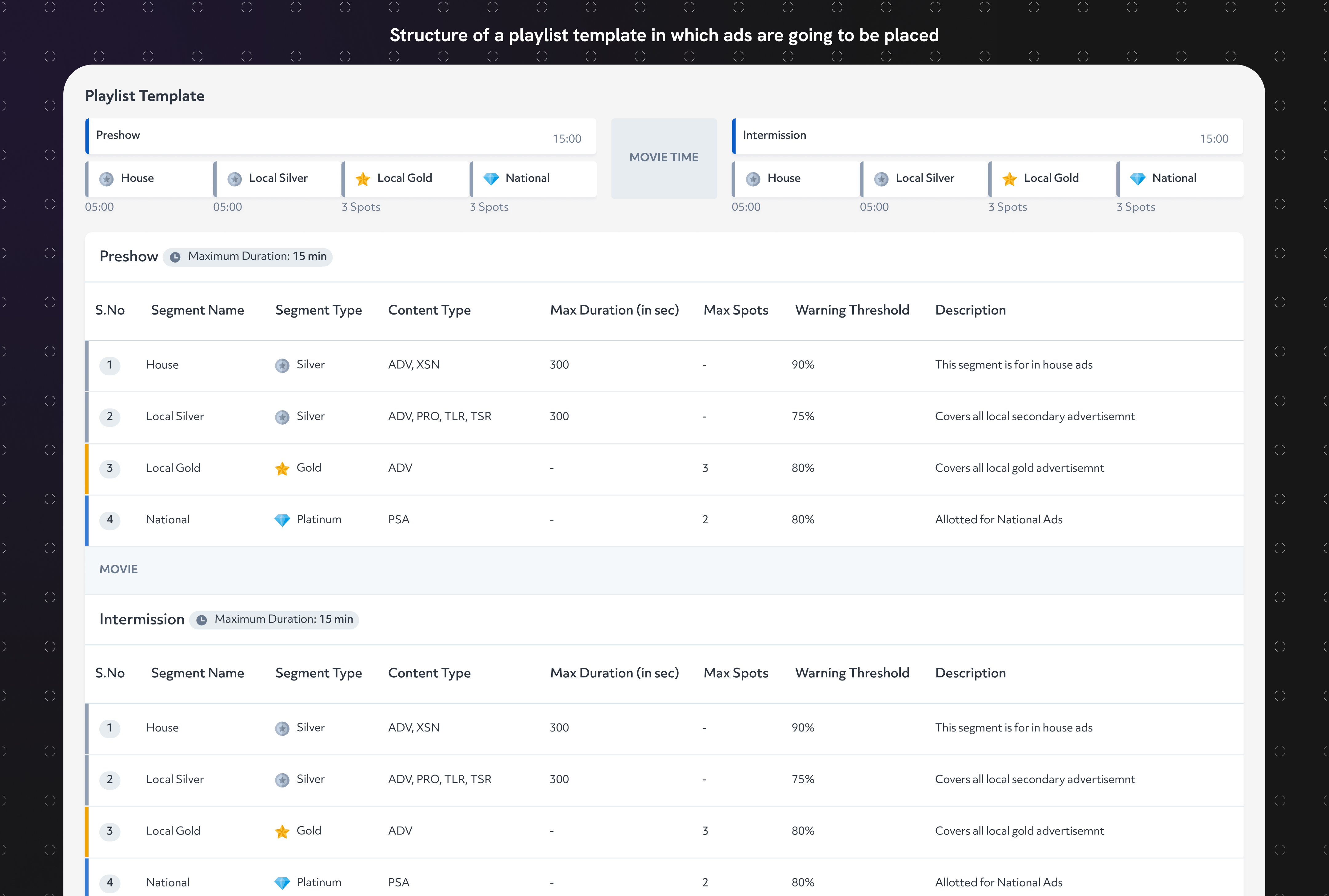
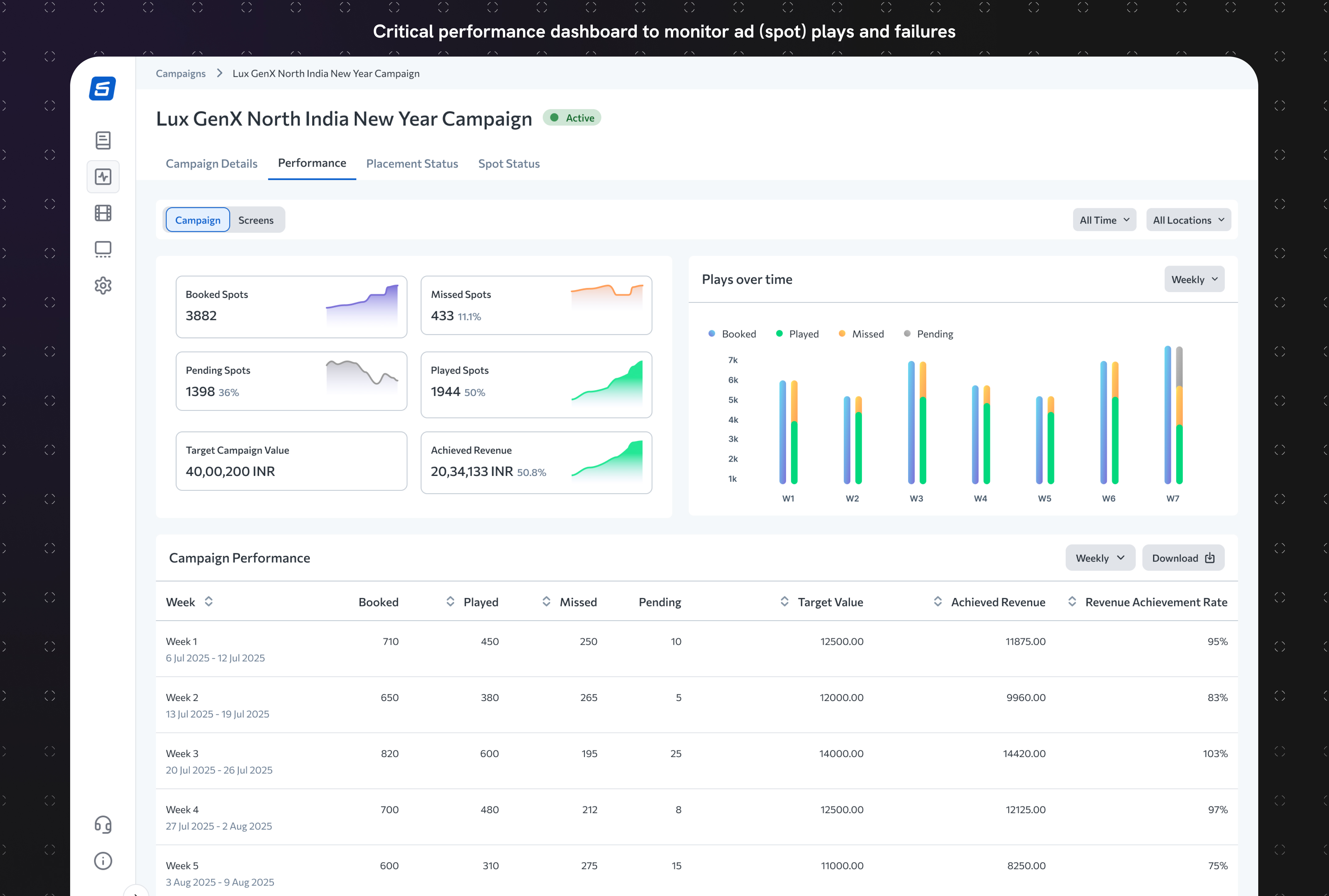
Cinema advertising products didn't have great existing patterns to borrow from. I was designing fundamentally new concepts: how do you model ad scheduling across thousands of screens? How do you show inventory availability for a cinema network? How do you give media agencies useful analytics without drowning operations teams in complexity?
I explored extensively. The design phase produced a comprehensive ideal product where everything was included.
It was too big to build.
Cutting to MVP
This is where the close partnership with the product team paid off. I was deeply involved in scoping, not just "told what to cut" but actively making tradeoff decisions.
I identified the core workflows that had to work on day one and the features that could come later. The MVP wasn't a stripped-down version of the ideal product. It was a focused product that did fewer things well.
What I took from this
This project taught me more about product thinking than anything else in my career. Writing user stories, making scope tradeoffs, understanding scheduling logic at a systems level.
It also reinforced something I believe strongly: the best products come from teams where the boundaries between roles are soft. When a designer understands engineering constraints and a PM understands design rationale, the decisions are just better.
Results
- Campaign creation and operations became 50% faster
- Replaced a fully manual ERP-based ad operations workflow
- Laid the foundation for a future cinema advertising marketplace